Best Wireless Earbuds (2026)
True wireless and neckband earbuds covering ANC, sound quality, battery life, and fit.
5 researched and ranked. We haven't handled any of them.
The Complete Buying Guide to Wireless Earbuds
True wireless earbuds have matured into a genuinely impressive category. The best models deliver sound quality that would have required a dedicated headphone amplifier a decade ago, combined with effective noise cancellation, all-day battery life, and the convenience of no cable whatsoever. But the market is also saturated with products that look compelling on a spec sheet and disappoint in real use.
At £179 to £250, you are buying into the premium tier — a space where the differences between products are more subtle and the right choice depends heavily on how and where you listen. This guide will help you navigate those differences and make a confident decision.
What to Look For
Active Noise Cancellation Quality and Transparency Mode
Active noise cancellation (ANC) uses microphones to sample ambient sound and generate an opposing signal, cancelling out environmental noise before it reaches your ears. The technology is now widespread, but the quality varies enormously.
Effective ANC depends on:
- The quality of the microphone array — more microphones sampling the environment from multiple angles produce better cancellation.
- The processing speed — faster chips can analyse and counter noise more effectively.
- The seal — ANC works in concert with the passive isolation provided by the eartips. A good seal is essential; without it, the best ANC chip in the world will underperform.
ANC is most effective against constant low-frequency noise: aircraft cabin rumble, train and tube noise, air conditioning. It is less effective against intermittent mid-frequency sounds like voices, and largely ineffective against sudden high-frequency noise like a door slamming.
Transparency mode — sometimes called ambient mode or passthrough — uses the same microphone array to pipe external sound back in, letting you hear your environment without removing the earbuds. A good transparency mode sounds natural, as though you are simply not wearing earbuds. A poor one sounds tinny, artificial, or introduces a noticeable delay that makes the world feel slightly uncanny. If you regularly need to be aware of your surroundings — walking on streets, working in an office where colleagues speak to you — a high-quality transparency mode matters almost as much as ANC.
Driver Size and Tuning
The driver is the component that converts the electrical signal into sound. In earbuds, driver size typically ranges from 6mm to 12mm. Larger drivers generally have more capacity for bass extension and dynamic range, though driver size alone is not a reliable predictor of sound quality — the acoustic chamber design and tuning matter just as much.
Tuning describes how the sound is balanced across the frequency range. Earbuds aimed at the mass market tend to boost bass and treble for an exciting, immediate sound. More audiophile-oriented tuning aims for a flatter, more neutral response that represents recordings accurately. Neither is objectively superior; it is a matter of preference. If you listen primarily to bass-heavy music, a warm or V-shaped tuning will feel more satisfying. If you listen to jazz, classical, or anything where instrument separation and accuracy matter, look for a more balanced tuning.
Bluetooth Codec Support
Bluetooth transmits audio in compressed form. The codec determines how the audio is encoded before transmission and decoded in the earbuds. Different codecs offer different combinations of quality and latency:
- SBC — the universal baseline codec, supported by every Bluetooth device. Adequate for listening but not the best quality.
- AAC — Apple''s preferred codec. Performs well on iPhones and Macs, less reliably on Android devices where AAC performance varies by manufacturer.
- aptX and aptX HD — Qualcomm''s codecs, supported by many Android phones. aptX provides CD-quality audio at lower latency; aptX HD adds higher bit depth. Not supported by Apple devices.
- LDAC — Sony''s high-resolution codec, capable of transmitting significantly more audio data than SBC or AAC. Requires both the earbuds and the source device to support it. Available on Android; not supported by iPhone.
The practical implications: if you use an iPhone, AAC is your ceiling for Bluetooth audio quality. If you use Android and your phone supports LDAC, prioritising LDAC earbuds will deliver noticeably better audio quality for high-quality audio files and streaming at high bitrates. Codec support is listed in the specifications and is worth checking against your phone''s capabilities.
Battery Life: Buds and Case
Battery life figures from manufacturers are optimistic. They are measured at moderate volume, often without ANC running. Real-world battery life with ANC enabled is typically 15–30% lower than the stated figure.
Pay attention to:
- Earbud battery life — how long you get per charge. For commuters, six hours is the minimum; eight or more is comfortable for a full workday without needing to return to the case.
- Total battery with the case — the charging case provides additional charges. A case with four additional full charges gives you substantial total battery life without needing a mains socket for days.
- Charging speed — some cases support fast charging: 10 minutes in the case provides an hour or two of playback. Useful if you forget to charge overnight.
- Wireless charging — some cases support Qi wireless charging. Convenient if you already have a wireless charger on your desk.
IP Rating
An IP (Ingress Protection) rating tells you how resistant the earbuds are to water and sweat. The second digit is the relevant one for liquids:
- IPX4 — resistant to splashing from any direction. Adequate for sweaty gym sessions and light rain.
- IPX5 — resistant to water jets. More robust for heavy exercise.
- IPX7 — can be briefly submerged. Overkill for most uses, but genuinely reassuring.
For gym use, IPX4 is the minimum; IPX5 or above is preferable if you sweat heavily. For commuting and general use, IPX4 is usually sufficient.
Fit: Ear Tips and Wings
Fit is personal, and no specification on paper can tell you whether a particular earbud will work in your ear. However, there are useful indicators:
- Ear tip material — silicone is the most common, firm enough to create a good seal but comfortable for moderate periods. Memory foam tips conform to the ear canal shape and improve passive isolation significantly, though they are slower to compress and insert.
- Size options — quality earbuds include at least three sizes (S/M/L) and sometimes four or five. A proper fit requires a seal: the tip should feel snug without being uncomfortable, and music should sound balanced. If bass seems weak or treble sounds harsh, try a different tip size before returning the product.
- Ear wings or fins — some earbuds include rubber wings or fins that anchor the earbud against the outer ear. Useful for exercise use where vigorous movement would otherwise dislodge the earbud. Not everyone finds them comfortable; some ears simply do not have the geometry for winged designs.
Multipoint Connection
Multipoint connection allows the earbuds to be simultaneously paired to two devices — for example, a laptop and a phone. When a call comes in on your phone, audio switches automatically. When you pause music on the laptop, you can start a podcast on the phone without re-pairing. It sounds like a small feature but becomes genuinely useful once you are used to it. Check whether multipoint is supported if you regularly switch between a work computer and a personal phone.
Common Mistakes to Avoid
Assuming all ANC is equal
The presence of ANC in the spec sheet tells you almost nothing about how effective it is. At the premium price tier, most earbuds have some ANC; the differences between basic and excellent ANC are substantial. Read third-party reviews that test ANC in specific environments — aircraft, trains, open offices — rather than accepting the manufacturer''s marketing language.
Ignoring codec support for your phone
Buying earbuds with LDAC or aptX HD when you have an iPhone is pointless — the iPhone does not support those codecs and will fall back to AAC regardless. Conversely, buying AAC-only earbuds for an Android device may limit quality unnecessarily. Check your phone''s Bluetooth codec support first.
Buying without trying fit
Fit is the most important factor in comfort and sound quality, and it cannot be assessed from a photo or a spec sheet. If possible, visit a store that has display models. Otherwise, buy from a retailer with a generous return policy and test the fit properly: insert the earbuds correctly (twist to seat the tip fully in the canal), play music at normal volume, and assess whether the bass feels full. If it sounds thin, try a larger tip size before concluding the earbuds are unsuitable.
Trusting manufacturer battery claims
As noted above, real-world battery life is consistently lower than stated figures. If a manufacturer claims seven hours, budget for five to six hours with ANC running. Plan your purchases and charging habits accordingly.
Price Tiers
Budget (under £80)
Earbuds in this bracket have improved dramatically and offer ANC, reasonable battery life, and adequate sound quality. The compromises show in ANC effectiveness (often weak against mid-frequency noise), codec support (usually SBC and AAC only), and build quality. For casual listening and occasional commutes, entirely viable. For heavy daily use or demanding noise environments, the limitations become apparent.
Mid-range (£80–£180)
The mid-range now overlaps significantly with what was premium performance two or three years ago. Effective ANC, high-quality transparency modes, aptX or LDAC support, and well-tuned sound are all available here. This is where most buyers should look unless they have specific requirements that demand the premium tier.
Premium (£180 and above)
At this level, you are buying the best ANC currently available, the best transparency modes, the highest codec support, and typically the most refined tuning. The differences are real but incremental. The right choice at this price requires matching specific strengths — one brand excels at ANC, another at transparency mode, another at sound quality — to your personal priorities.
Specific Advice for Your Situation
Commute noise cancelling vs gym durability?
For commuting — particularly underground trains or aircraft — ANC quality and passive isolation are the top priorities. Focus on earbuds with strong ANC track records and memory foam tips. For gym use, prioritise secure fit (wings), high IP rating, and lightweight design. Earbuds that excel at commuting often compromise on secure fit; dedicated sports earbuds often sacrifice some ANC depth. If you need one pair for both, prioritise the use case where poor performance would irritate you more.
iPhone or Android?
iPhone users: AAC is your codec ceiling. Focus your evaluation on ANC, sound tuning, transparency mode, and fit rather than codec specifications — codec support beyond AAC is irrelevant to you. Android users: check your specific phone''s Bluetooth codec support. If it supports LDAC and you listen to high-quality audio files or stream at high bitrates, LDAC support in your earbuds will produce an audible improvement.
Calls or music priority?
For frequent phone and video calls, microphone quality matters significantly. Look for earbuds with multiple microphone arrays and wind noise reduction — reviews from people who use them primarily for calls are more informative than measurements focused on music playback. For music-focused listening, prioritise driver quality, tuning, and codec support over call microphone performance.
Summary
Premium wireless earbuds are a meaningful purchase, and the differences between products at this price point are real. ANC quality and transparency mode are the most variable factors — read reviews that test these specifically in realistic environments. Check codec compatibility with your phone before buying. Do not take battery life figures at face value, and prioritise finding a secure fit above almost everything else: a perfectly tuned earbud that falls out of your ear is useless. Match your priorities to your primary use case rather than chasing the highest specification on every axis.
Our Top Pick
Apple
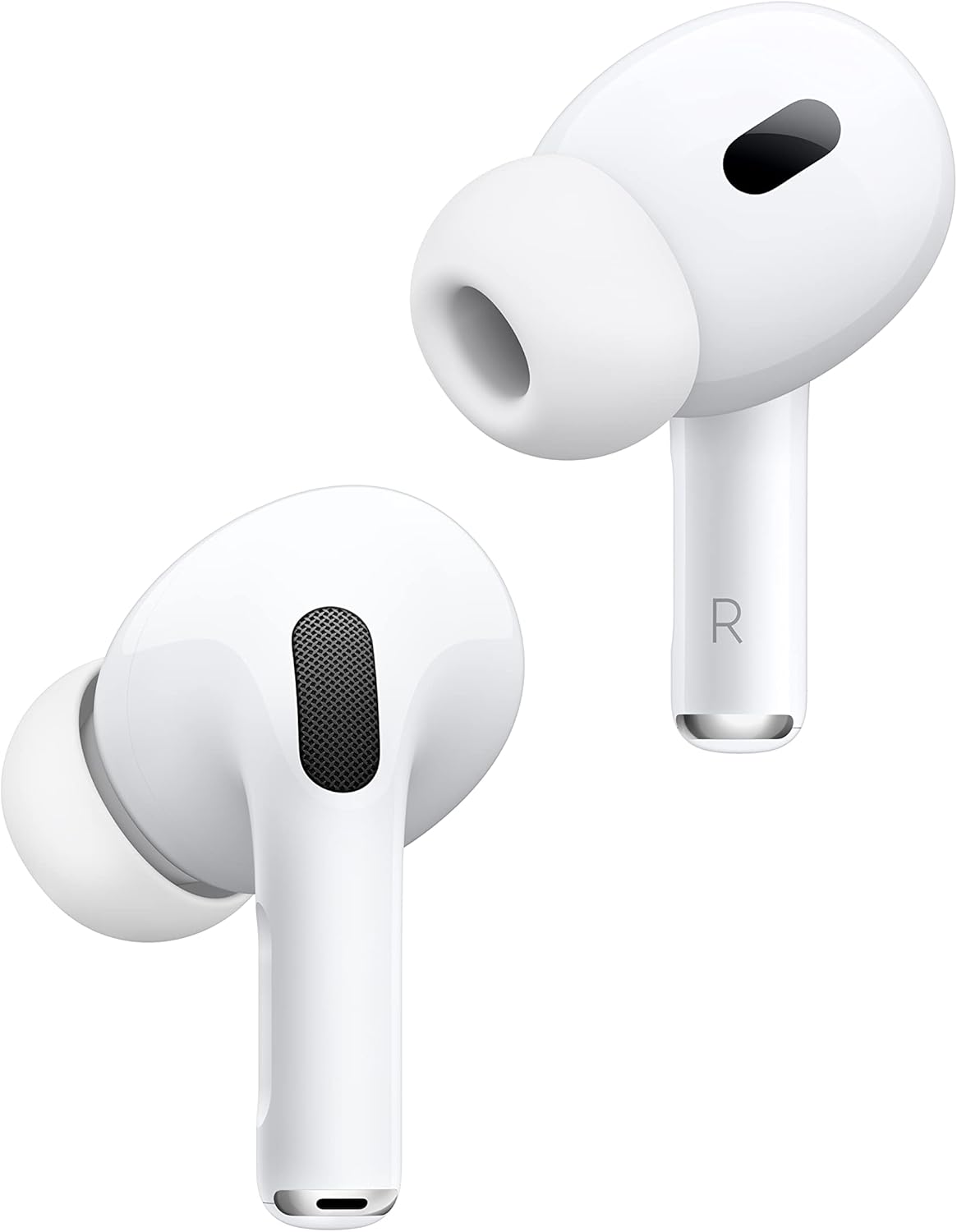
Apple AirPods Pro 2 with USB-C
7.5/10
Apple's flagship earbuds deliver exceptional ANC and seamless iOS integration, but the £229 price tag puts serious pressure on your wallet.


