Best Air Purifiers (2026)
HEPA and activated-carbon air purifiers for bedrooms, offices, and large living spaces.
12 products tested and compared
How to Choose an Air Purifier: A Complete Buying Guide
Indoor air quality is something most of us don't think about until it becomes a problem — a family member develops allergies, you notice a persistent smell, or you read something unsettling about airborne particulates. Air purifiers have moved from niche medical equipment to mainstream home appliances, and the market is now crowded with options ranging from budget desktop units to premium smart devices that monitor your air in real time.
The good news is that the core technology is relatively straightforward once you understand a few key concepts. This guide explains what actually matters when choosing an air purifier, what the specifications mean in practice, and how to match the right machine to your specific situation.
What to Look For
CADR Rating: The Most Important Number You've Never Heard Of
CADR stands for Clean Air Delivery Rate, and it's the single most reliable performance metric for air purifiers. It measures how quickly a purifier can clean a room of a given size, expressed in cubic metres per hour (m³/h). A higher CADR means the purifier can clean more air, more quickly.
The practical rule: your purifier's CADR should be at least two-thirds of your room's volume in cubic metres. So for a bedroom that's 3m × 4m × 2.5m (30m³), you want a CADR of at least 20m³/h — though in practice, for allergy sufferers or heavily polluted environments, you'd want more headroom than that.
Be aware that some manufacturers quote room size coverage in square metres without specifying the ceiling height they're assuming. Always try to find the actual CADR figure — it's the only meaningful comparison between models.
CADR is typically quoted separately for dust, pollen, and smoke, because different filter media capture different particle sizes with different efficiency. For most buyers, the smoke figure is the most useful single number as smoke particles are the finest and hardest to filter.
HEPA vs H13: Filter Grade Explained
HEPA (High Efficiency Particulate Air) is a filter standard, not a brand. A true HEPA filter captures 99.97% of particles at 0.3 microns — the size that passes most easily through filter media. Pollen, dust mites, pet dander, and mould spores are all significantly larger than 0.3 microns and are captured at even higher rates.
H13 is a higher-grade filter within the HEPA family, capturing 99.95% of particles at the most penetrating particle size (which for H13-rated filters is tested more rigorously than standard HEPA). In practice, for most domestic applications, the difference between HEPA and H13 is marginal — both will handle allergens, dust, and particulates effectively.
What matters more than chasing filter grades is whether the purifier is properly sealed. A purifier with a genuine H13 filter but poor casing seals will perform worse than one with a standard HEPA filter in a well-engineered housing, because air can bypass the filter entirely. Look for models that specify a sealed system.
Activated carbon filtration is a separate layer that addresses gases and odours — VOCs (volatile organic compounds) from paint and furniture, cooking smells, cigarette smoke odour, and so on. HEPA alone does nothing for odours; you need activated carbon for that. Most mid-range and premium purifiers include both layers.
Room Size Coverage
Manufacturers typically quote a maximum room size in square metres. Treat this figure as an upper bound under ideal conditions; for meaningful air changes per hour (ideally 4–5 ACH for allergy sufferers), target a model rated 20–30% larger than your actual room.
Be realistic about where you'll use the purifier. A single unit cannot meaningfully clean the air throughout an entire open-plan living space if it's physically placed in one corner — air circulation in your home is not that efficient. For an open-plan kitchen-diner, you may need either a larger unit or two smaller ones.
Noise Levels
Air purifiers run continuously, often in bedrooms, and noise is therefore a significant real-world consideration. Manufacturers quote noise levels in decibels (dB) for different fan speeds.
As a reference point:
- Below 30 dB: Near-silent; suitable for sleeping rooms without disturbing sleep
- 30–40 dB: Noticeable but not disruptive; comparable to a quiet library
- 40–50 dB: Clearly audible; acceptable in living rooms but intrusive in bedrooms for light sleepers
- Above 50 dB: Loud on high settings; fine for periods of active cleaning but not for background operation
Most purifiers are quiet on their lowest settings and progressively louder as fan speed increases. Check the noise specification at the sleep or minimum setting rather than the maximum, since that's the setting you'll use most of the time.
Filter Replacement Costs
This is a running cost that is frequently ignored at purchase and causes significant regret later. HEPA and carbon filters need periodic replacement — typically every 6–12 months depending on usage and air quality in your area. Replacement filter costs vary enormously:
- Budget models: £15–£30 per filter set
- Mid-range: £30–£60 per set
- Premium: £50–£100+ per set
Over a three-year ownership period, filter costs can easily exceed the original purchase price of a budget purifier. Always check filter availability and cost before buying — some manufacturers discontinue models and their replacement filters become unavailable or expensive.
Common Mistakes to Avoid
Buying for the Wrong Room Size
This is the most common error, usually in both directions. Buying a purifier rated for 15m² and putting it in a 30m² room means it's working constantly at maximum speed, wearing out faster, and still not achieving adequate air changes per hour.
Equally, buying a large, powerful purifier for a small bedroom means you're running it at low speed (which is fine) but you've paid for capacity you'll never use.
Measure your room — length, width, and ceiling height — and match the CADR to the volume, not just the floor area.
Ignoring Running Costs
An air purifier runs continuously. Even at 30–50W, that's a meaningful electricity cost over a year (roughly £40–£65 at current UK rates, based on average 2025–26 unit costs). Add filter replacement on top, and the total cost of ownership over three years can be two to three times the purchase price.
Before buying, calculate:
- Annual electricity cost at the rated wattage (assuming 24/7 operation)
- Annual filter replacement cost
The cheapest purifier to buy is rarely the cheapest to run.
Ioniser Concerns
Some air purifiers include ioniser functions that release negatively charged ions to cause particles to clump together and fall from the air. While this sounds appealing, there are legitimate concerns:
- Ionisers can produce trace amounts of ozone as a byproduct, which is a respiratory irritant
- Particles that fall to surfaces rather than being captured by a filter still need to be vacuumed up
- The effectiveness of ionisation as a standalone technology is significantly inferior to physical HEPA filtration
Some premium purifiers include ionisers as a supplementary feature alongside HEPA filtration, where the ozone output is very low and the primary filtration does the heavy lifting. The concern is with purifiers that use ionisation as their primary or sole filtration mechanism — particularly "plasma" or "electrostatic precipitator" models that have no traditional filter.
If in doubt, opt for a HEPA-based purifier without ionisation, particularly for use in bedrooms or around children.
Price Tiers
Budget: Under £80
Budget purifiers in this range are typically small desktop or compact units suitable for a single room of 10–20m². Build quality is adequate and the filtration is functional, but you should have realistic expectations: filter quality, fan engineering, and noise management are all compromises.
These models can work well for:
- Small bedrooms (10–15m²)
- Home offices
- A secondary unit alongside a better main purifier
Check carefully that they use genuine HEPA filters rather than "HEPA-type" or "HEPA-style" filters, which are unrated and significantly less effective.
Mid-Range: £80–£180
This is the sweet spot for most domestic buyers. Mid-range purifiers typically offer:
- Genuine HEPA and activated carbon filtration
- CADR suitable for a standard living room or large bedroom (25–40m²)
- Auto mode with air quality sensors
- Acceptable noise levels at minimum settings (below 30 dB)
- Reasonable filter costs and availability
Air quality sensors are worth paying for if you want the purifier to adjust its speed automatically based on actual air conditions rather than running at a fixed speed continuously. They detect particulate levels and throttle up when air quality degrades.
Premium: £180 and Above
Premium purifiers typically add:
- Higher CADR for larger open-plan spaces (50m² or above)
- Better sealed systems and more rigorously tested filter media
- More sophisticated sensors (PM2.5, PM10, VOC, CO2)
- Quieter operation at comparable airflow rates
- App connectivity and scheduling
- Sleeker industrial design
The most significant genuine benefit at this price point is usually the combination of higher CADR and lower noise — premium engineering allows more airflow with less fan noise. For a large living space or for allergy sufferers who need maximum effectiveness, this matters.
App connectivity and scheduling are convenient but rarely essential for an appliance with good auto mode.
Specific Advice: Matching the Purifier to Your Needs
Allergies vs Odours vs General Air Quality
These are genuinely different problems requiring different solutions:
Allergies and respiratory sensitivities (dust, pollen, pet dander, dust mites): A well-sealed HEPA purifier with high CADR is the priority. Activated carbon is useful but secondary. Focus on air changes per hour and filter quality.
Odours and VOCs (cooking smells, pet odours, new furniture off-gassing, cigarette smoke): Activated carbon filtration is essential. The depth and weight of the carbon layer matters — a thin carbon filter handles mild odours but will be overwhelmed by heavy cooking smells or cigarette smoke. Look for models that specify the weight of their carbon media (200g or above is meaningful).
General air quality improvement (particulate reduction, urban pollution): A standard HEPA purifier with adequate CADR for the room will handle most indoor particulates effectively. Urban PM2.5 levels do penetrate indoors, particularly in cities near busy roads.
Bedroom vs Living Room
Bedrooms demand quieter operation above all else. Prioritise the noise specification at minimum/sleep settings. A purifier that's genuinely silent at its lowest setting and still moves a reasonable volume of air is what you want here — and you may want to run it continuously.
Living rooms typically need higher CADR due to larger floor area and more activity generating particulates. Here, noise is less critical since the TV, conversation, and background noise mask fan sound. Focus on room coverage and ease of maintenance.
Final Thoughts
Air purifiers are one of the few appliances where the ongoing cost of ownership is likely to exceed the purchase price over time. Take filter replacement costs as seriously as the sticker price, and verify filter availability for any model you're considering.
For most British homes — a standard two or three-bedroom house, with one or two family members who suffer from hay fever or dust allergies — a mid-range HEPA purifier with an air quality sensor, rated for 25–35m², and with filter replacement costs under £40 per year, will be entirely adequate.
Resist the temptation of impressive-looking specifications from unknown brands. Established manufacturers with verifiable CADR ratings, genuine filter certifications, and reliable replacement filter supply chains are worth the modest premium over unverified alternatives.
AROIEVE
AROEVE Air Purifier for Bedroom with H13 HEPA 3-stage Filter, 5W Energy Consumption, Quiet 22db with Aroma, Tackles Pollen, Smoke, Pet Fur, VOCs, White
The AROEVE delivers exceptional value with H13 HEPA filtration, whisper-quiet 22dB operation, and genuinely low power consumption—making it one of the few sub-£100 purifiers that doesn't compromise on filtration quality or noise levels.
AROIEVE
AROEVE Air Purifier for Bedroom with H13 HEPA 3-stage Filter, 5W Energy Consumption, Quiet 22db with Aroma, Tackles Pollen, Smoke, Pet Fur, VOCs, White
LEVOIT
LEVOIT Air Purifier for Bedroom Home, CADR 187 m³/h, 80m², with HEPA & Carbon Filters removes Pollen Allergies Dust Smoke, Air Cleaner with Timer, Quiet 24dB Sleep Mode, Core 300
Shark
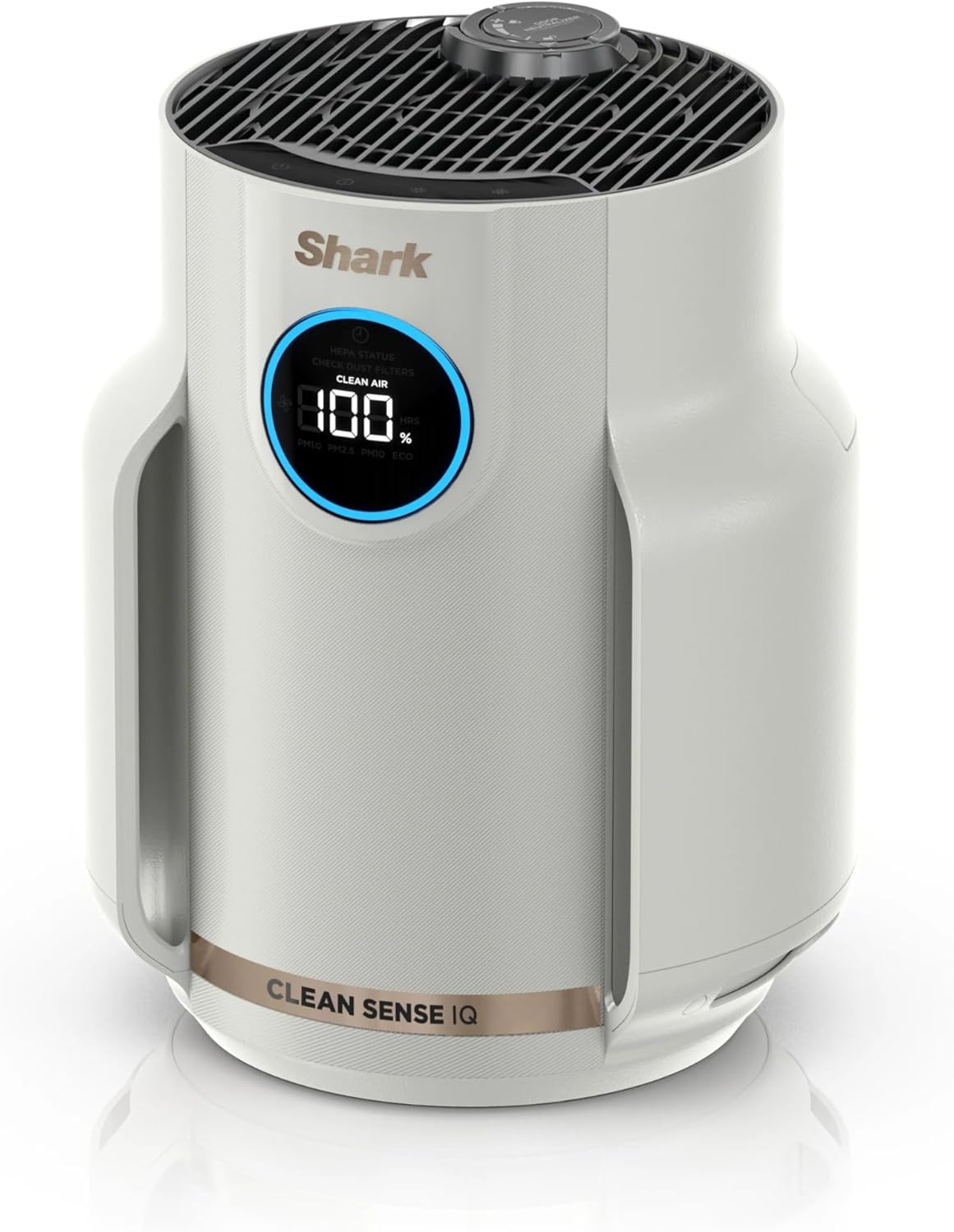
Shark NeverChange5 Air Purifier for Home, Bedroom, Office, Room Coverage 23sqm, 5-Year HEPA Filter Traps 99.97% of Allergens including Dust, Pollen, Pet Dander, Quiet, LED Display, Dove HP072UK

LEVOIT
LEVOIT Air Purifier for Bedroom Home, Quiet HEPA Filter Cleaner with Fragrance Sponge & 3 Speed for Better Sleep, Air Frenshener, Allergies, Dust, Pet Dander, Odour, Smoke, Office, Desktop, Core Mini

Blueair
Blueair Blue Max 3250i Smart WiFi Air Purifier, HEPASilent Combination Filter Up To 48m² Rooms Removes 99.97% Pollen, Dust, Mould, Bacteria, Viruses | Activated Carbon Reduces VOCs, Odours

LEVOIT
LEVOIT Smart HEPA Air Purifier for Bedroom Home 64m², Alexa & APP Control with Timer, Filter with Quiet Sleep Mode, Air Freshener, Remove Allergens for Dust Odour Pollen Smoke, Gift, Wifi, Core 200S
MORENTO
MORENTO Smart Air Purifier for home Large Rooms up to 1076 ft², Wi-Fi and Alexa compatible, Auto Mode, Quiet Mode 24dB, HEPA Filter Removes Dust, Pollen, Smoke, 1 Pack + 3 Modes

Shark
Shark NeverChange5 Air Purifier for Home, Bedroom, Room Coverage 60sqm, 5-Year HEPA Filter Traps 99.97% of Allergens including Dust, Pollen, Pet Dander, Auto Mode, Quiet, LED Display, White HP150UK
MELEDEN
MELEDEN HEPA Air Purifier for Smoke, Pollen, Pet Dander, Odor, Dust Remove, Compact Air Purifiers for Home Bedroom, Kitchen and Office, No Ozone Air Cleaner
GoveeLife
GoveeLife Smart Air Purifier for Home Large Rooms and Allergies, Covers up to 97m², PM2.5 Monitor, HEPA Sleep Mode, 3-in-1 Filter with App and Alexa Control for Pet Hair, Pollen, and Odors

Shark
Shark Air Purifier 4 with Automatic Air Quality Tracking, Room Coverage: 34m², Quiet, Digital Display, Remote Control, Captures Allergens, Removes Odours, Traps Dirt & Pet Dander, White HE400UK
Philips