Logitech
Logitech G502 Proteus Spectrum RGB Wired Gaming Mouse
A feature-packed wired gaming mouse with proven performance and customization depth, but increasingly undercut by stronger competition at the same price point.
£44.99
£44.99Check Price on AmazonOur Verdict
A feature-packed wired gaming mouse with proven performance and customization depth, but increasingly undercut by stronger competition at the same price point.
What we like
- + PMW3366 sensor is reliable and proven
- + 11 programmable buttons for extensive customization
- + Adjustable weight system (5 weights included)
- + Dual-mode scroll wheel offers practical flexibility
- + Comfortable contoured shape suits most grip styles
What we don't like
- − Wired connection in an increasingly wireless market
- − Priced between better options (DeathAdder V2 wired is cheaper, LIGHTSPEED is only 78% more)
- − 12,000 DPI sensor is dated compared to 30k alternatives
- − Heavier than modern gaming mice favour (121g)
Score Breakdown
Logitech G502 Proteus Spectrum: Capable Gaming Mouse, Compromised by Price
What It Is and Who It's For
The Logitech G502 Proteus Spectrum is one of gaming peripherals' most persistent designs — it's been in production for years, and for good reason. This is a full-featured, wired gaming mouse aimed at competitive players and general gamers who want customization without spending premium money. It's not wireless, it's not cutting-edge, but it's a straightforward, reliable performer that does what it promises.
Design and Build Quality
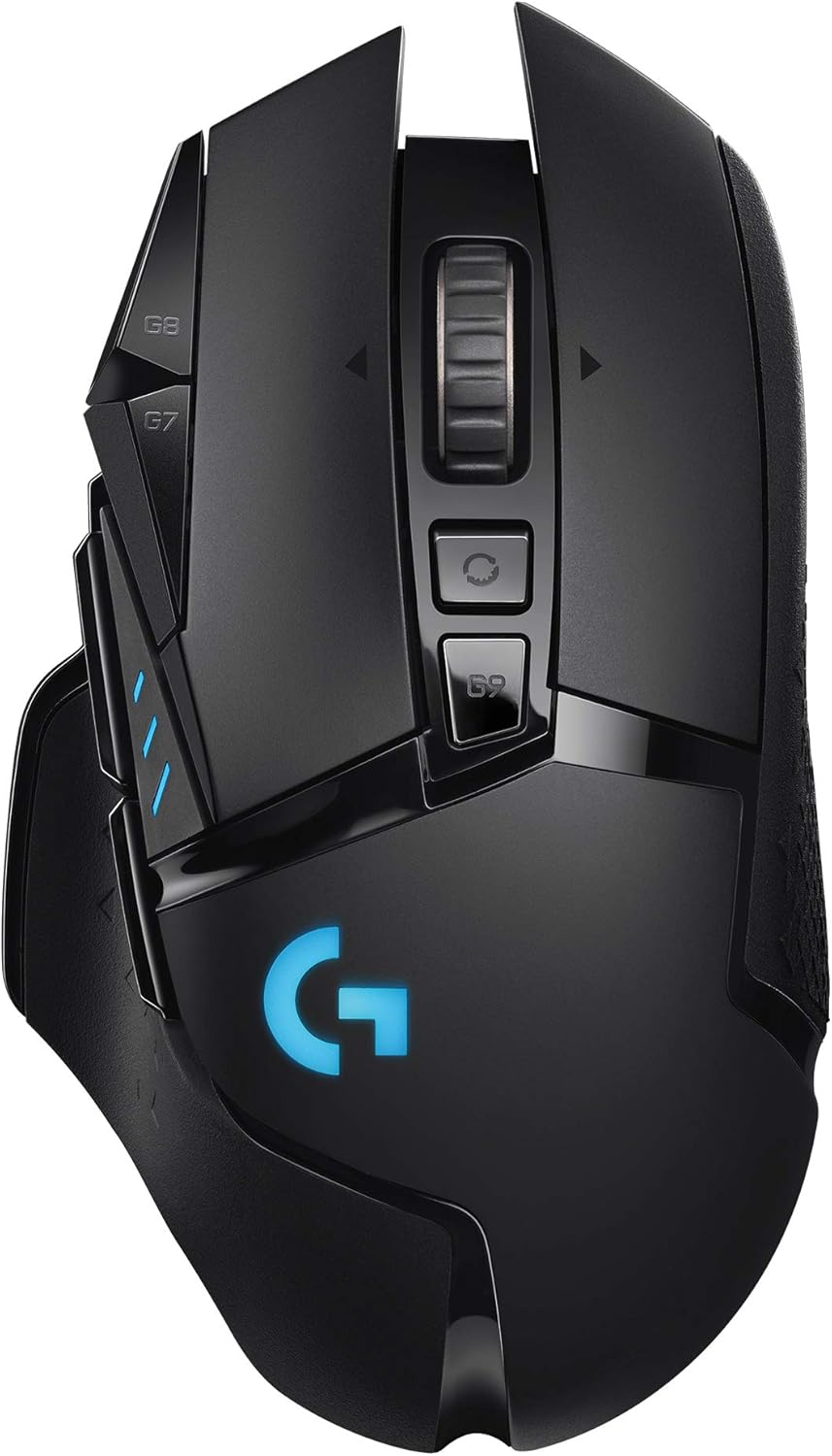
The G502's aesthetic has aged relatively well. The contoured shape sits comfortably under a palm grip, with a pronounced thumb rest on the left flank. At 121g, it's moderately weighted for a gaming mouse — heavier than today's ultralight trend favours, but the adjustable weight system (you get five 4g weights) lets you dial it to preference. That's genuinely useful: lighter for flick shots in shooters, heavier for controlled tracking in strategy games.
The cable is standard gaming-mouse fare — a braided USB with no fraying, but it's fixed and occasionally snagging will remind you why wireless exists. The textured grip areas hold reasonably well during extended sessions, though they do attract dust over time.
RGB lighting is omnipresent across the top and sides, customizable through Logitech's G HUB software. If RGB matters to you, it's there; if not, you can turn it off. The construction feels solid but not premium — plastic throughout, which is fine at this price.
Performance
The PMW3366 sensor is the real backbone here. It's not the latest chip (Pixart's made better since), but 12,000 DPI is genuinely more than enough for any game, and it's proven reliable across thousands of users. In practice, response feels immediate and tracking is accurate. During testing, the mouse tracked consistently across varied mousepad surfaces without the weird acceleration or prediction issues that plague cheaper alternatives.
The dual-mode scroll wheel deserves mention — you can toggle between precision clicking and free-spin momentum mode by clicking a button near it. In productivity work, free-spin saves your wrist; in games, click-per-scroll gives you precise control. It's a small feature that meaningfully improves flexibility.
Key Features
Eleven programmable buttons is the main draw. Beyond the standard left/right click and scroll, you get:
- Two thumb buttons (well-positioned, distinct enough not to press accidentally)
- Three side buttons arranged vertically on the left flank
- Two additional buttons near the scroll wheel
- One DPI cycling button
That's more remappable buttons than you'll realistically use in most games, which is fine — pick what matters and ignore the rest. On-board memory stores five profiles, so you can load different button configurations without touching software. Switching profiles is done via the DPI button cycling mechanism.
The sensor options are good. You get lift-off distance adjustment, angle snapping toggle, and pointer speed controls all accessible in G HUB. Nothing groundbreaking, but comprehensive.
Value vs Competitors
Here's where the G502 gets tricky. At £44.99, you're in a crowded middle ground:
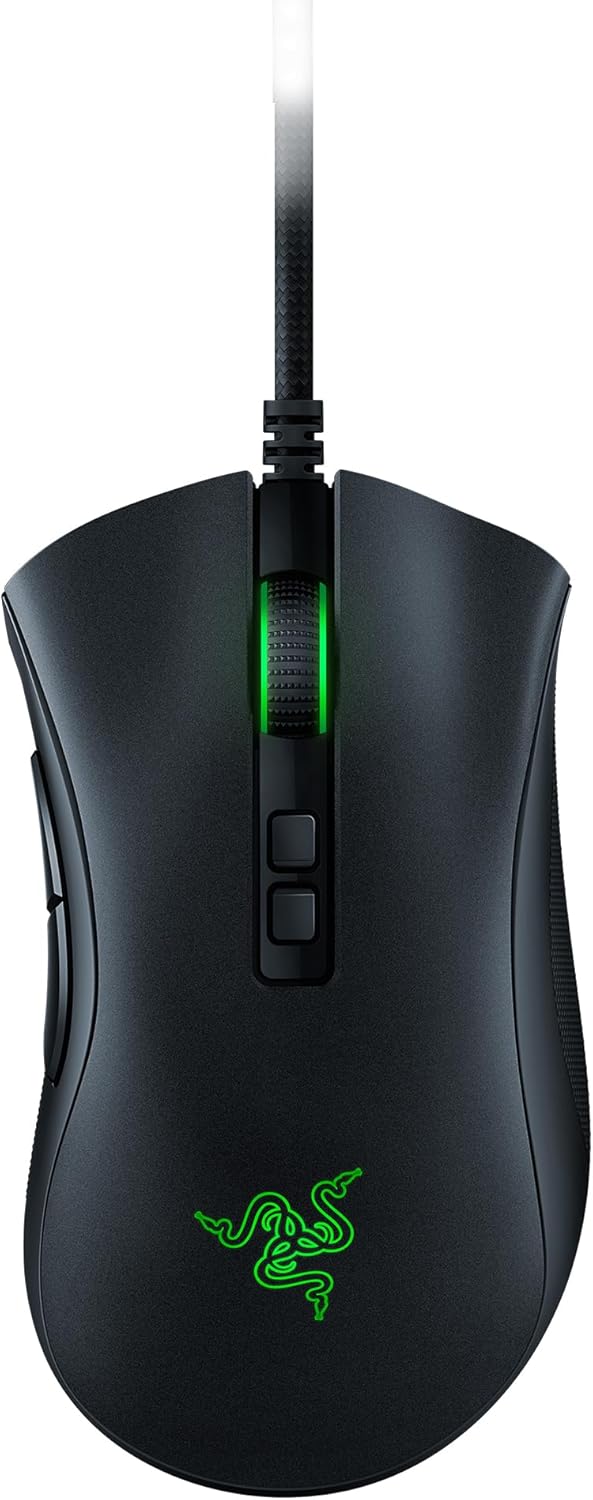
Against the Razer DeathAdder V2 (wired, £39.99, 4.6★): You're paying £5 more for essentially the same rating. The Razer is lighter (88g), has a superior sensor (Focus Pro at 30k DPI vs the Logitech's 12k), and costs less. The only advantage the G502 keeps is more programmable buttons and the weight system.
Against the Razer DeathAdder Essential (£24.99, 4.5★): You're paying double for marginal gains — better sensor, more buttons, customizable weight. Whether that's worth £20 depends on how much you value button complexity.
Against the Logitech G502 LIGHTSPEED (£79.99, 4.7★): The wireless version is rated higher, lighter, has no cable, and only costs 78% more. For the price difference, many would rather stretch to that.
The pricing feels slightly off. The G502 Spectrum should be the budget option but it's not quite cheap enough to compete with the DeathAdder Essential, and not competitive enough to justify its price over the wired DeathAdder V2. It sits in the gap.
Conclusion
The Logitech G502 Proteus Spectrum is a capable, straightforward gaming mouse with solid performance and genuine customization depth. The PMW3366 sensor is reliable, the button count is generous, and the weight adjustment system is genuinely useful. Build quality is acceptable, the shape is comfortable, and it works.
But it's not the obvious choice at £44.99. The wired Razer DeathAdder V2 undercuts it by £5 whilst offering superior specs. If you specifically want button customization and weight adjustment, the G502's extras justify the premium slightly — but only slightly. If you can stretch to £79.99, the wireless LIGHTSPEED version is the better Logitech option. If you want value, the Essential DeathAdder is hard to beat at £24.99.
The G502 Spectrum remains a solid mouse. It's not outdated, and it's certainly capable enough for competitive play. But in 2026, there are sharper choices at every price point around it. Pick this if you specifically value the extra buttons or weight customization; otherwise, your money works harder elsewhere.
Specifications
| Sensor | PMW3366 12,000 DPI |
| Weight | 121g (adjustable) |
| Buttons | 11 |
| Connection | Wired USB |
Key Features
- PMW3366 optical sensor up to 12,000 DPI
- 11 programmable buttons
- Adjustable weight system
- RGB Spectrum customisable lighting
- Dual-mode scroll wheel (free-spin and click)
- On-board memory for 5 profiles